A-Level Economics: Real or Nominal? Reading a Country's Growth Figures
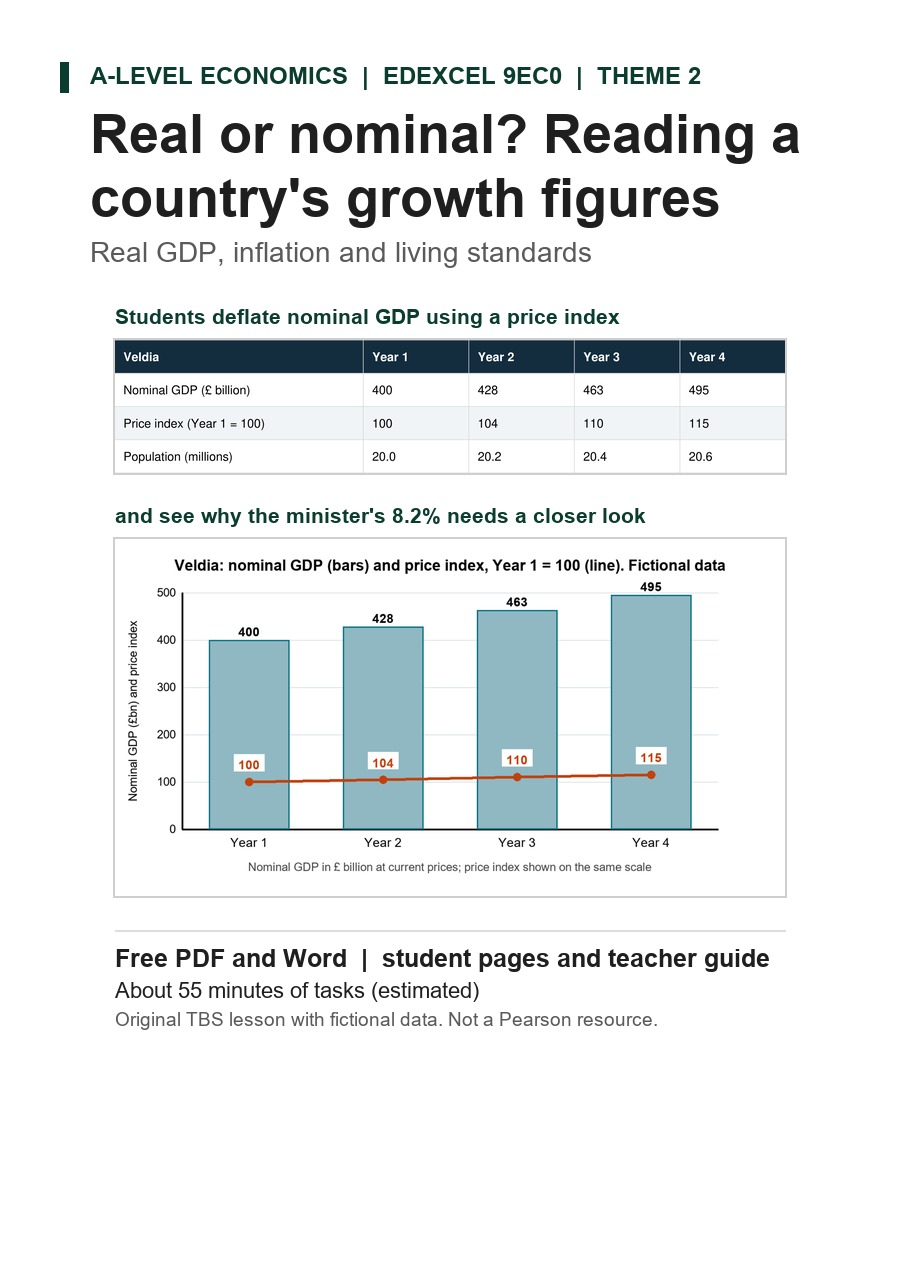
Students deflate a country’s nominal GDP with a price index, compare nominal growth, real growth and inflation, and judge a minister’s claim that the economy grew by 8.2%.
A-Level-Economics-Real-or-Nominal-GDP-Student
A-Level-Economics-Real-or-Nominal-GDP-Teacher
Want more like this?
Edexcel A level Economics, Theme 3: all 24 lessons for £13, about 54p a lesson. Eight original cases with learner pages, a teacher guide and full worked answers, as PDF and editable Word.
Original cases, not exam board questions. Not endorsed by any exam board.
What students do
- Sort descriptions into nominal or real, and total or per person
- Calculate real GDP for a fictional country from nominal GDP and a price index
- Calculate nominal growth, real growth and inflation, and explain the gap between them
- Evaluate a minister’s claim of 8.2% growth, then calculate real GDP per person and write a short judgement on whether living standards improved, naming one limitation of GDP
What the teacher gets
- A lesson plan for about 55 minutes of tasks, with a shorter 45-minute version. Allow longer in the timetable for handing out and feedback
- Worked answers for every question, with a chart of nominal and real GDP
- Indicative guidance for the written judgement. It is not an exam board mark scheme and carries no marks or grades
- Editable Word versions of both files, so you can change the country or the figures
Specification
Edexcel A level Economics A (9EC0), Theme 2, section 2.1.1 Economic growth: real GDP growth, real and nominal, total and per capita, comparing growth over time and the limitations of GDP for comparing living standards. Checked against the Pearson specification, Issue 2, October 2016. The country and every figure are fictional, the price index is invented for the lesson and the questions are original. This is not a Pearson resource, and the lesson has not yet been tested in a classroom.
Free, no sign up. Share it with your department. See the rest of the library.