Cambridge AS & A Level Business: Size of Business, Which Laundry Is the Biggest?
Learners measure three laundries by employees, sales revenue, capital employed and market share, find that the biggest firm depends on the measure, sort the limits of each measure and the advantages and disadvantages of small and large firms, and evaluate a firm’s claim to be the biggest.
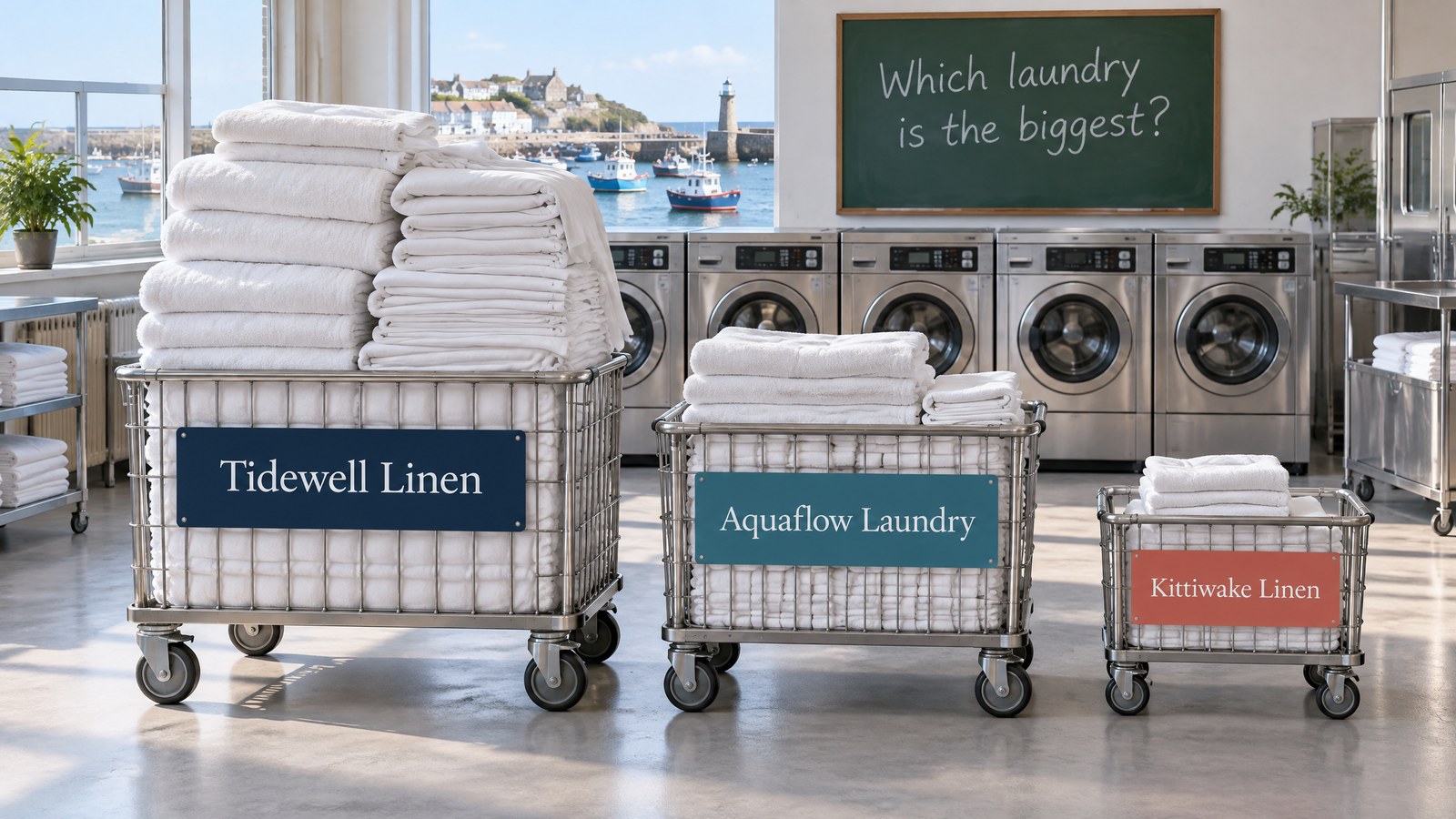
Cambridge-AS-A-Level-Business-9609-Size-of-Business-Student
Cambridge-AS-A-Level-Business-9609-Size-of-Business-Teacher
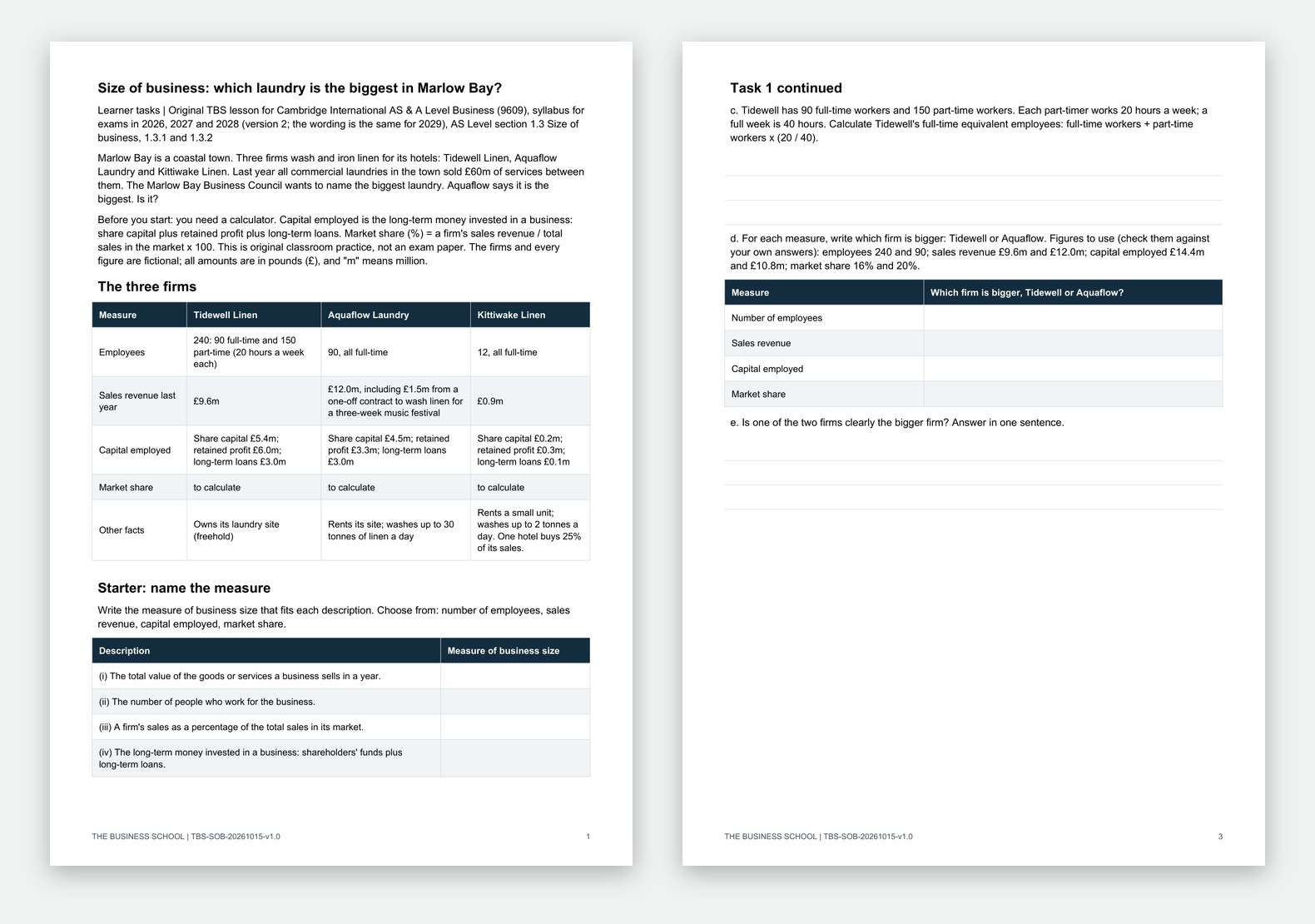
What students do
- Name four measures of business size from short descriptions
- Calculate market share, capital employed and full-time equivalent employees for three laundries
- Sort the limits of each measure in pairs and classify the advantages and disadvantages of small and large firms
- Evaluate a firm’s claim to be the biggest in town, using figures from at least two measures
What the teacher gets
- A lesson plan for about 55 minutes of tasks, with a shorter 45-minute version. Allow longer in the timetable for handing out and feedback
- The completed tables and worked answers for every question
- Indicative guidance for the written evaluation. It is not an exam board mark scheme and carries no marks or grades
- Editable Word versions of both files, so you can change the business or the figures
Specification
Cambridge International AS & A Level Business (9609), syllabus for exams in 2026, 2027 and 2028 (version 2), AS Level section 1.3 Size of business: 1.3.1 Measurements of business size, the appropriateness of different methods of measuring the size of a business, and 1.3.2 Significance of small businesses, the advantages and disadvantages of being a small business (printed page 14; the wording is the same in the 2029 syllabus). The business and every figure are fictional and the questions are original. This is not a Cambridge resource, it is not endorsed by Cambridge, and the lesson has not yet been tested in a classroom.
Free, no sign up. Share it with your department. See the rest of the library.